Smart Prefetch vs. NitroPack & Yottaa: The Ultimate Mobile Speed Stack
Discover how Smart Prefetch, NitroPack, and Yottaa combine to perfectly eliminate mobile browsing latency, optimize third-party scripts, and maximize high-ticket B2B SaaS and ecommerce conversions.

Key Takeaways
- Performance is Cumulative: No single tool magically solves the speed problem. You need a tech stack that optimizes the entire browsing journey.
- Stop Fighting Each Other: NitroPack, Yottaa, and Smart Prefetch solve fundamentally different bottlenecks in your site's architecture. They are allies, not competitors.
- The Ultimate Handoff: While NitroPack optimizes the payload and Yottaa controls third-party dependencies, Smart Prefetch works proactively using AI to hide the network transit time entirely.
- Money Over Mechanics: Optimizing TTFB and LCP is irrelevant if your users abandon sessions during page transitions. Real financial ROI requires eliminating post-click latency.
The Mobile Speed Paradigm: Money Over Mechanics
If you are an agency owner scaling a D2C brand's revenue, or a technical founder operating a high-ticket legal practice, you don't merely want "fast pages." You want closed business.
The industry obsession with metrics like Time to First Byte (TTFB) or Largest Contentful Paint (LCP) in isolation is fundamentally flawed. We optimize those metrics to improve Core Web Vitals on PageSpeed Insights because we believe they correlate with revenue. However, a synthetic lab score does not capture the true Browsing Tax-the hidden post-click latency that bleeds conversion.
Enter the modern performance stack. In a landscape saturated with rudimentary plugins, engineering a seamless, app-like user experience requires robust architecture. Here is where the heavyweights step in: NitroPack, Yottaa, and Smart Prefetch.
How do they compare, and more importantly, how do they combine to create the ultimate mobile speed stack?
Prefer Watching Over Reading?
I have recorded a detail comparison video on this topic. You can watch it here
The Shared North Star: Revenue Protection
All three tools share an identical north star: maximizing website speed, improving Core Web Vitals (such as LCP, CLS, and Interaction to Next Paint), and driving e-commerce revenue by eliminating latency that causes shopper dropout.
They move far beyond traditional, fragmented caching plugins to offer highly advanced, enterprise-grade solutions. But instead of replacing one another, they work together to intercept, sequence, and predict user behavior across different platforms and stages of the browsing journey.
The Architecture: Solving Three Distinct Bottlenecks
While they share a mutual goal, each tool addresses a fundamentally different bottleneck natively embedded in web architecture:
NitroPack: Resource Transformation & Delivery
NitroPack operates as a reactive optimization layer heavily indexed on the initial page load. When a user requests a URL, it intercepts that request to immediately deliver an optimized HTML document from the server cache alongside assets from its global CDN network. An architectural review of their WordPress core reveals that they intelligently layer this mechanism directly on top of existing server-side caching-tapping into Varnish, LiteSpeed, or Redis, while utilizing local disk caching as a robust fallback.
This infrastructure systematically solves origin file bloat through aggressive compression logic. It applies over 60 concurrent optimization strategies, including next-gen image encoding (WebP and AVIF), pre-emptive asset sizing to eliminate layout shifts (CLS), the strict deferral of non-critical JavaScript and CSS, and asynchronous Critical CSS generation to force instantaneous initial paints.
Critically, NitroPack's optimization engine only engages reactively-firing exclusively when a user explicitly requests a page from the origin server.
Yottaa: Third-Party Orchestration
When you review the DOM of a modern Shopify or WooCommerce interface, you'll realize you have 40-60 external dependencies-marketing pixels, review widgets, live chat, and analytics. Yottaa specializes in attacking this chaos.
Yottaa tackles third-party orchestration by acting as a control layer between the browser and the application's runtime. Using "Application Sequencing," it aggressively prioritizes the execution order of first- and third-party scripts. It prevents non-essential marketing tags from hogging the main CPU thread during critical interaction moments, ensuring elements like the checkout cart or interactive sliders function instantaneously when engaged.
Similarly, Yottaa's orchestration only intervenes at runtime, kicking in solely during the active rendering phase within the browser.
Smart Prefetch: Predictive Navigation
While NitroPack and Yottaa aggressively optimize a page after it is explicitly requested by the shopper, Smart Prefetch functions completely proactively to eliminate the transit cost happening between those requests.
Smart Prefetch leverages an advanced machine learning heuristic to mathematically predict a user's next tap. Utilizing the Speculation Rules API documented by MDN, it silently loads the future page in an isolated background thread before the user touches the screen. There's no waiting for network resolution; when the touch event finally executes, the page swaps out memory instantaneously.
Crucially, when Smart Prefetch initiates a background request, it is still routed through NitroPack's cache layer. This means the server is shielded: predicting and fetching multiple navigation pathways won't overwhelm your origin database, as NitroPack serves the optimized, cached representations.
The Core Feature Matrix (Structured Comparison)
To clearly understand their domain expertise, reviewing this breakdown shows precisely how each tool is positioned.
| Feature Scope | NitroPack | Yottaa | Smart Prefetch |
|---|---|---|---|
| Optimization Timing | Reactive (On-Request) | Runtime Execution | Proactive (Pre-Request) |
| Primary Target Problem | File Bloat, TTFB, Caching | JavaScript & 3rd-Party Bloat | Navigation Latency |
| Core User Benefit | Rapid LCP engagement post-load | Unblocked, fluid main-thread interactions | Instantaneous page-to-page navigation |
| Core Technology Mechanism | Global CDN, WebP, Critical CSS | Application Sequencing | ML AI, Speculation Rules API |
| Platform Limitations | WP, WooCommerce, Custom PHP. No Shopify | Primarily Enterprise Ecommerce Sites | Platform Agnostic (Shopify, WP, Custom) |
| Direct ROI Metric | LCP, First Contentful Paint | Interaction to Next Paint (INP) | Checkout Velocity Boost |
| Performance Measurement | Lab & Field Data | Lab & Field Data | Field Data Only (CrUX, RUM) |
| Architecture Support | SPA & Multi-Page Sites | SPA & Multi-Page Sites | Multi-Page Sites Only |
| Architectural Risks | Can break complex UI logic if misconfigured | Dramatic API cost overkill for lean sites | Increased data payload if predictions miss |
The Handoff During a Visitor's Journey
Think of this stack as a precision relay race. Here is exactly how they handle the handoff during a live shopper's sequence.
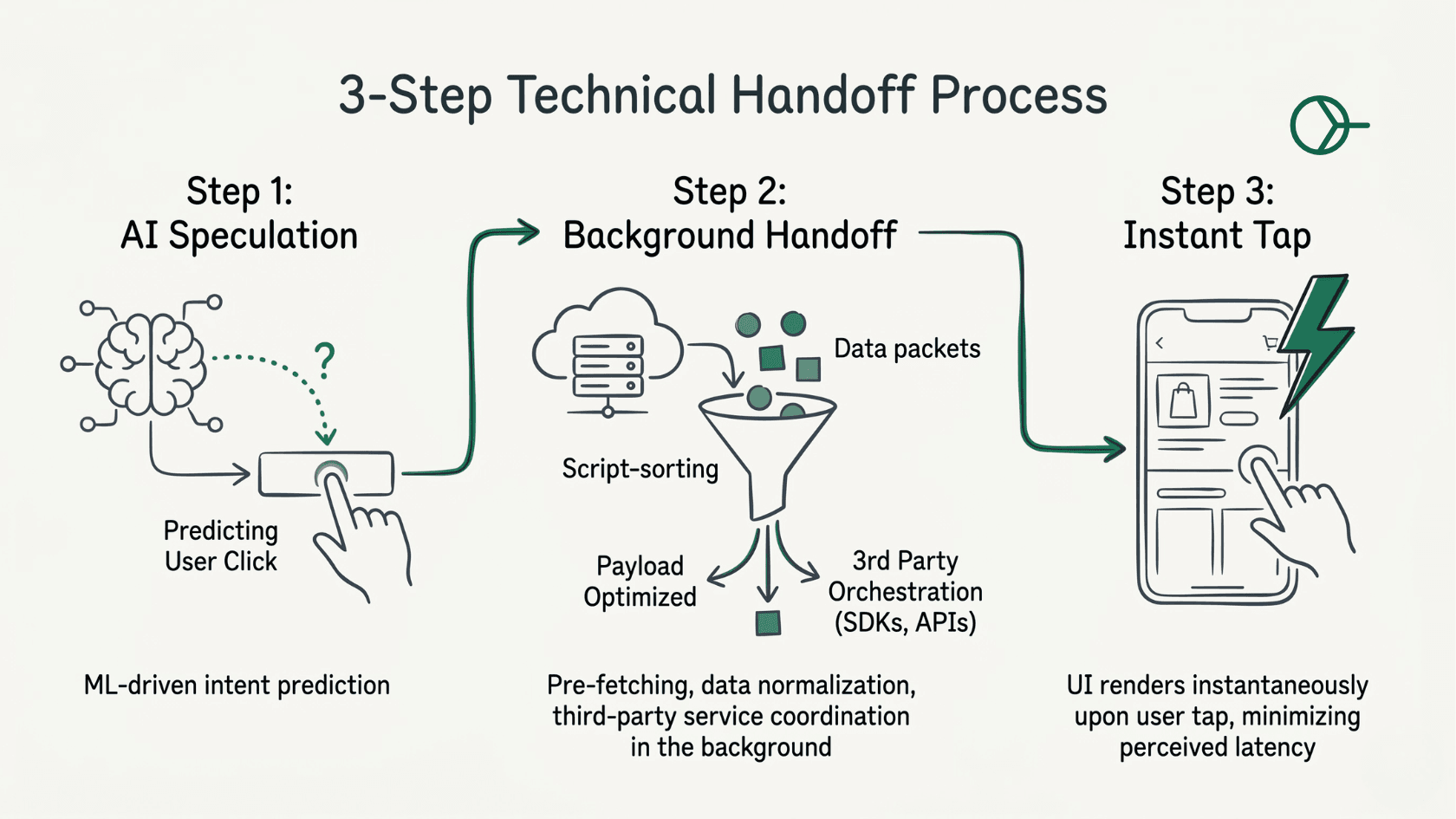
Phase 1: Pre-Navigation Speculation (Smart Prefetch)
While the visitor is carefully reading the product details on the active tab or idling to make a decision, Smart Prefetch's telemetry is continuously calculating the mathematical vectors of their intent. When confidence thresholds breach optimal bounds, Smart Prefetch injects an invisible payload telling the browser to start silently fetching or prerendering the checkout page or the next variant.
Phase 2: Optimized Retrieval and Orchestration (NitroPack & Yottaa)
As the web browser fetches that predicted page invisibly over the network, NitroPack catches the request. NitroPack immediately returns the aggressively crunched HTML document, serving the critical CSS and fully compressed images without hitting the origin's heavy query load.
Because this page is actively prerendering inside a hidden tab, Yottaa's execution engine ensures those bloated analytics and marketing pixels do not fire concurrently with heavy rendering tasks. Yottaa forces a strict schedule, making sure nothing competes for bandwidth against the active tab the visitor is still looking at.
Phase 3: Instant Activation
Finally, the visitor decides to tap the checkout button. The browser ignores the network entirely. It simply promotes the fully-rendered, fully-optimized, correctly-sequenced background document instantly into active view.
The navigation latency is fundamentally zero.
The Measurement Trap: Lab Scores vs. Field Data
It is critical to understand how these tools are measured. Implementing NitroPack and Yottaa will immediately improve your synthetic Lab scores (like Google Lighthouse, GTmetrix, or PageSpeed Insights) because those tools strictly audit the initial, cold-start page load. They are highly effective for establishing a fast baseline and will positively impact your overall performance metrics.
However, the massive benefits of Smart Prefetch will never reflect in a synthetic Lighthouse or GTmetrix report. Lab tools do not simulate a shopper browsing fluidly between multiple product pages; they do not audit navigation latency. Smart Prefetch's true impact is proven exclusively in the wild-drastically improving your real-world CrUX (Chrome User Experience) field data, accelerating session momentum, and directly multiplying your bottom-line conversion rate.
Understanding The Limitations
No single mechanism is flawless in the pursuit of perfection. You must strategically layer these architectures.
Smart Prefetch's Limitation: It cannot replace your foundational caching layer and other server side performance optimizations. If you predictively fetch a page that takes 5 seconds to generate un-cached on the origin server, you will unnecessarily punish the user's data plan and device memory. Smart Prefetch must sit on top of a rock-solid, highly cached baseline like NitroPack or WP Rocket. If you choose to operate without a dedicated speed plugin, you should deploy a raw edge-caching CDN-such as Cloudflare, Akamai, Fastly, or AWS CloudFront-to serve the core HTML document and other static assets used on the page, bypassing the costly database queries required to dynamically generate the page. Furthermore, because Smart Prefetch is engineered explicitly to eliminate navigation friction between discrete URLs, it is only compatible with traditional multi-page architectures. While NitroPack and Yottaa seamlessly optimize initial loads and script execution for Single Page Applications (SPAs), Smart Prefetch requires a multi-page environment to function.
NitroPack's Limitation: It is fundamentally constrained to WordPress, WooCommerce, and custom PHP variants. NitroPack does not service Shopify natively due to Shopify's strict routing control. Furthermore, NitroPack's optimizations only apply to the solitary page actively under request. The user must still endure the painful "Browsing Tax"-the network transit time stalling their screen after tapping a link. Eliminating this transit void is precisely the gap Smart Prefetch bridges.
Yottaa's Limitation: Yottaa is positioned almost exclusively for complex, heavily scripted enterprise-level networks. For a lean website with minimal third-party intervention, deploying Yottaa is architectural overkill. If you are running a standard WooCommerce store or a B2B lead-gen funnel, Yottaa's pricing and complexity will shatter your ROI. Smart Prefetch and NitroPack are all you need.
Conclusion: Stop Reporting Speed. Start Reporting Revenue.
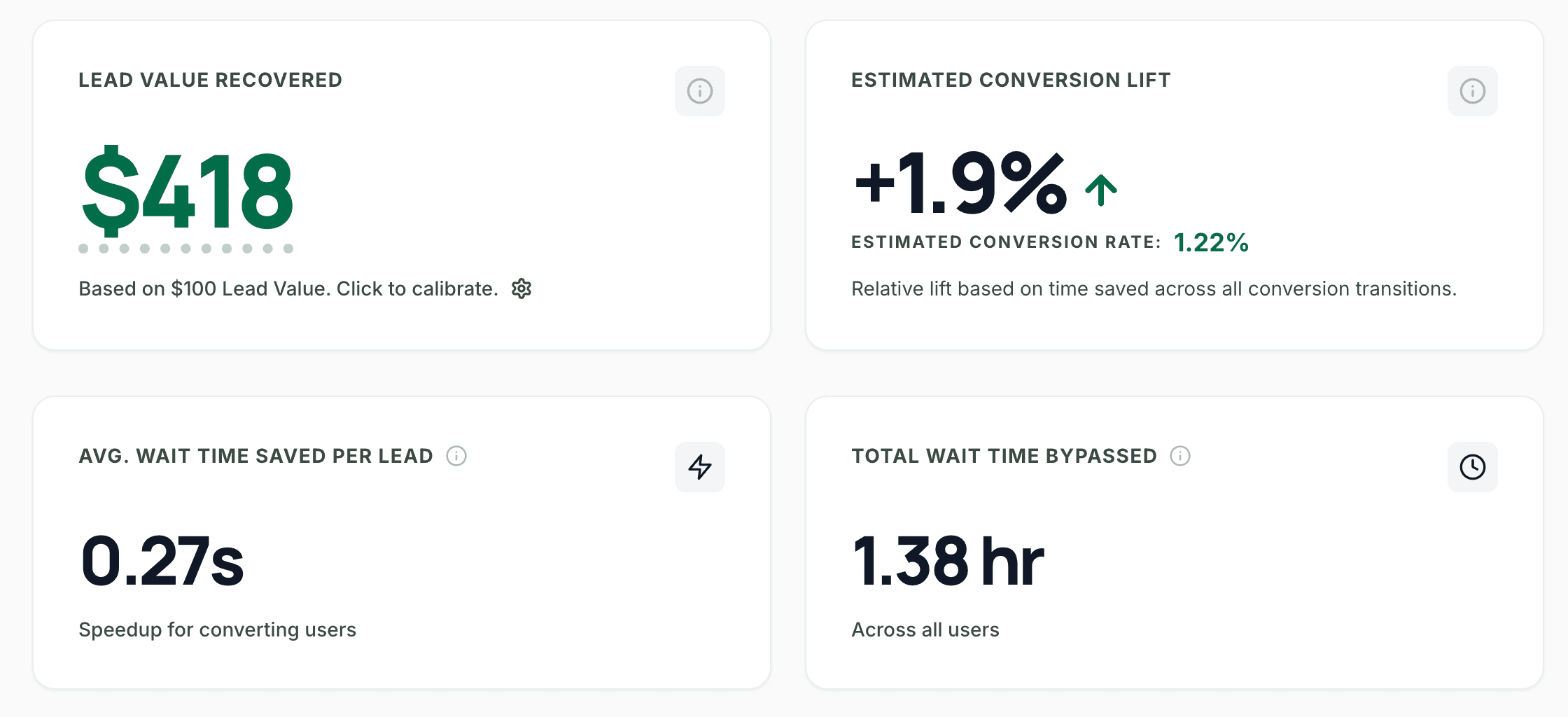
In modern operations, shaving 50 milliseconds off your CSS file won't drive your top-line revenue unless it correlates to protecting the session's overall intent. As seen in The $418 Latency Leak Case Study, mitigating friction translates immediately to verified lead recovery.
Deploying NitroPack to crush payloads, adding Yottaa to control bloated scripts, and installing Smart Prefetch to eliminate post-click mobile latency constructs the ultimate competitive moat. Stop waiting on the network. Make your pipeline instant.
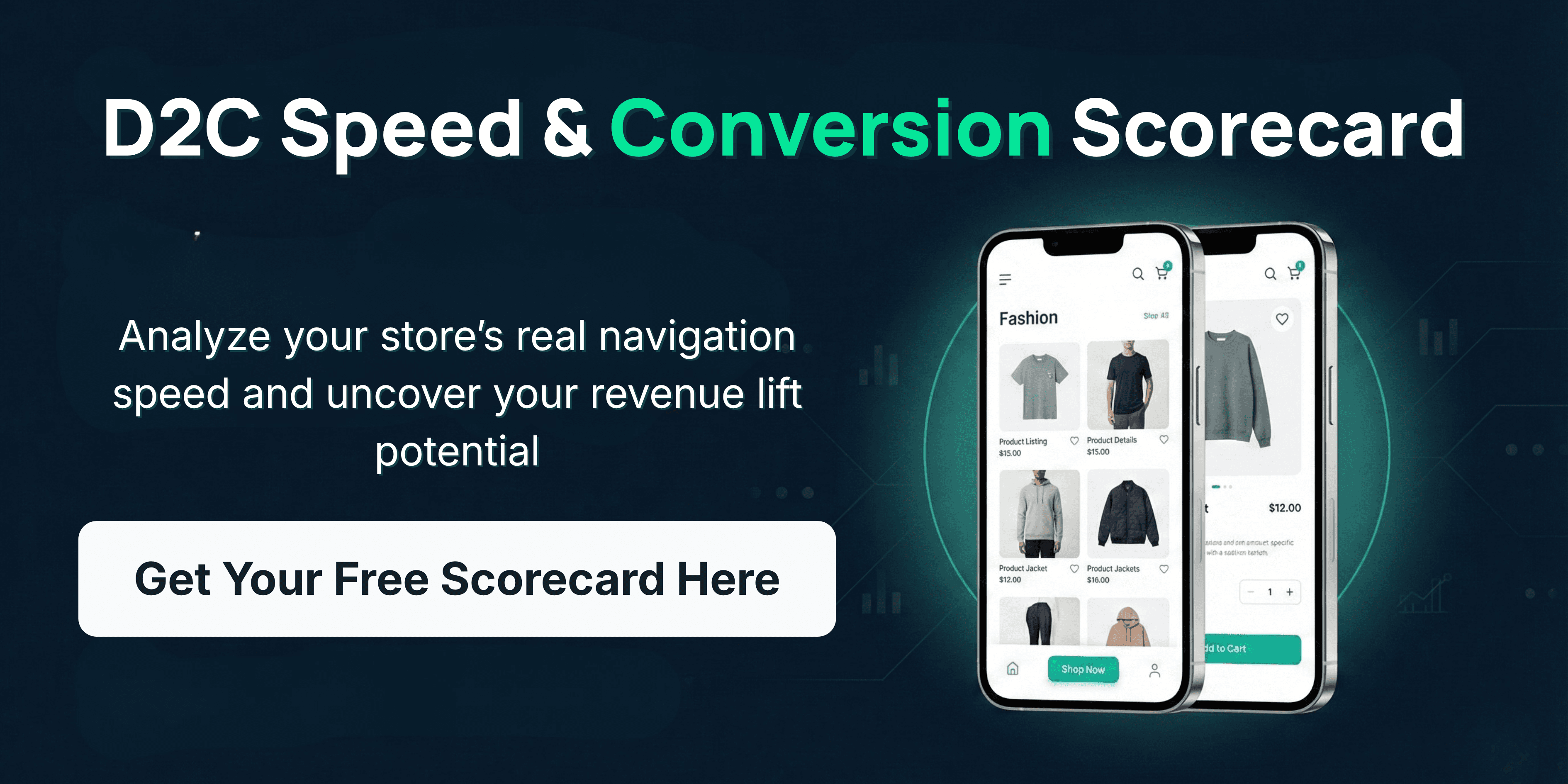
If you are an agency owner or brand founder eager to track your own mobile revenue gaps, audit your transition speeds instantly using our D2C Speed & Conversion Scorecard.
Frequently Asked Questions: Mobile Site Speed and Optimization

Sandeep Kumar
With over 14 years of hardcore backend engineering experience, Sandeep is a verified technical expert on server-side performance. He specializes in deep infrastructure optimization, building highly scalable backends, and ensuring lightning-fast load times for high-traffic stores and web applications.